Introduction
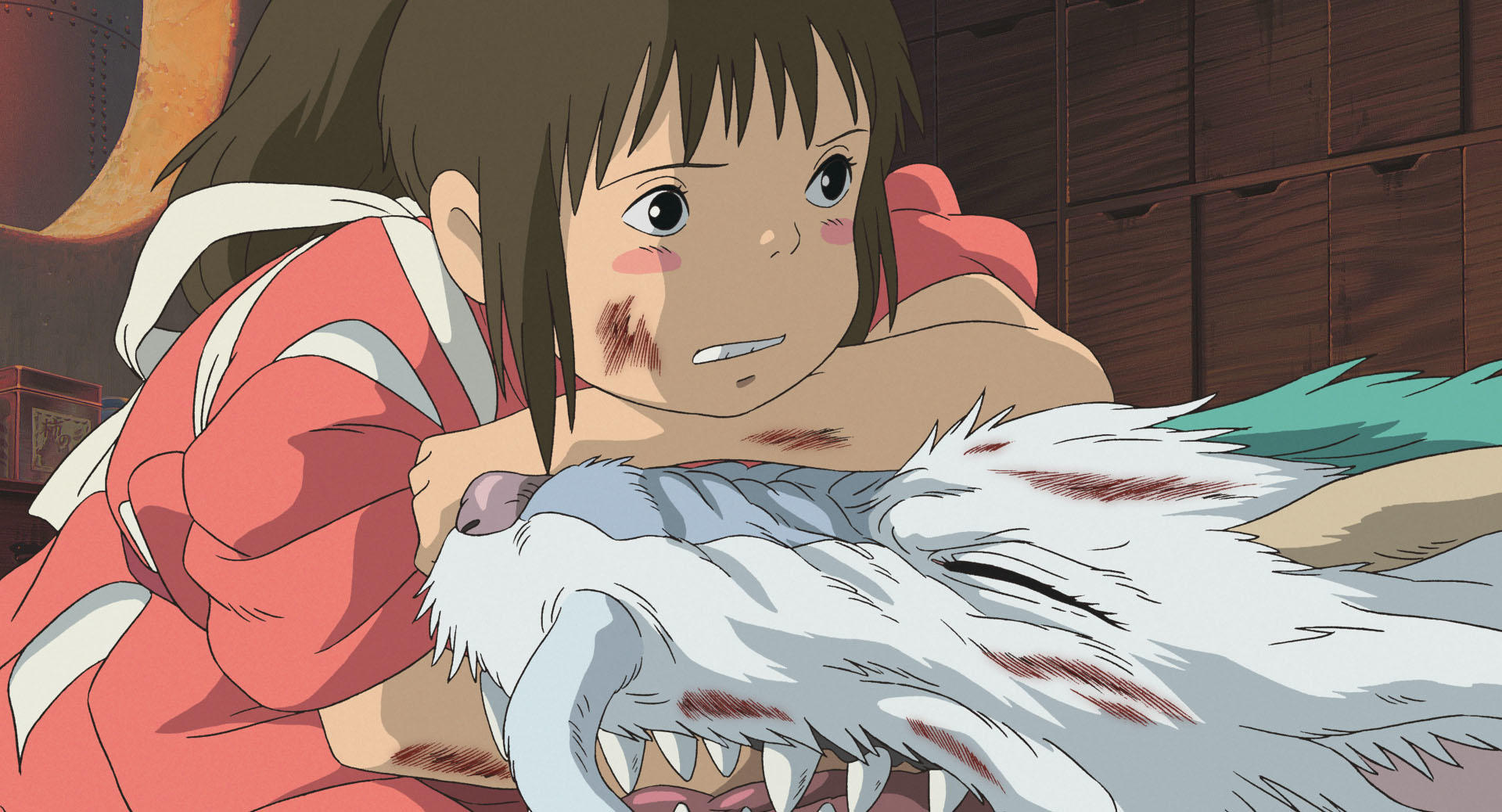
Spirited Away is my personal favorite film of all time, it is one of Hayao Miyazaki's great masterpieces that once sat on the top of the box office revenue for about 20 years ($395 million) and had gone on to win many awards including the Academy Award for Best Animated Feature Film at the 75th Academy Awards in 2003. Little do people know that this fantasy film, which is now considered a classic of anime cinema, had gone through many phases of development during production.
In May 2001, a few months before Spirited Away's release in Japan, Miyazaki was interviewed in which he mentions the earlier incarnations of the film. Here's the quote translated from the original Japanese to English by Ryoko Toyama, edited by Team Ghiblink, sourced from Nausicaa.Net:
"There is a book for children, "Kirino Mukouno Fushigina Machi (A Mysterious Town Over the Mist)" (by Sachiko KASHIWABA, published by Kodansha). It was published in 1980, and I wondered if I could make a movie based on it. This was before we started work on "Mononoke Hime". There is a staff member who loved this book when she was in fifth grade, and she read it many times. But I couldn't understand why it was so interesting; I was mortified, and I really wanted to know why. So, I wrote a project proposal (based on the book), but it was rejected in the end. After that, I thought it would be better to have a more lively character, so I wrote a proposal called "Rin the Chimney Painter." It was a contemporary story with a heroine who was a little bit older, but it was rejected as well. It ended up being a story with a scary old woman sitting on the bandai of a bath house. Looking back, all three stories had bath houses in them."
When it comes to Studio Ghibli's works, people may think that they're planned and worked on from the requests of Hayao Miyazaki, but that's not the case. Many different projects go through consideration before production, and even the one project that Miyazaki worked on for a year would be lost if the producer Toshio Suzuki decided that it was not suitable for the audience, such as the case of Rin the Chimney Painter.

Early development
The earliest incarnation of Spirited Away began in March 1998. Studio Ghibli was working on the comedy film My Neighbors the Yamadas, directed by the late Isao Takahata. The next film had not been decided, and a meeting was held at Studio Ghibli to consider an adaptation of The Mysterious Town Beyond the Fog, a novel by Sachiko Kashiwaba.
In this fantasy novel, a sixth-grade girl sets out on a journey alone, and when she passes through a misty forest, she finds a mysterious town lined with Western-style houses, where she begins working in a shopping district run by the descendants of wizards. Sounds quite similar to Spirited Away, doesn't it?
The novel had been read by Studio Ghibli staff for quite some time and was put into consideration. This is where Hayao Miyazaki comes into the story. Miyazaki began working on a project based on the novel under the title "Rina on Gotha Gacha Street," but this project was quickly abandoned as producer Toshio Suzuki thought that there were weak points that made it too weak to be structured as a movie.
Fun fact: in Whisper of the Heart (1995), the character Seiji Amazawa reads Kashiwaba's The Mysterious Town Beyond the Fog in the library scene.
 |
| Not Rin, but Nahoko from The Wind Rises was a painter after all. |
Production
So, Miyazaki decided to work on something else, one involving a bathhouse. He then named the new project "Rin the Chimney Painter.' The background of the work was influenced by artist Shusaku Arakawa, and a character was planned to be modeled after him. At the time, Miyazaki had only just become acquainted with the artist, and they hit it off through conversations. Miyazaki's encounter with Arakawa would also influence the construction of the Ghibli Museum.
Rin the Chimney Painter was planned to be set in 1923 after the Tokyo earthquake that happened in the same year. It tells the story of Rin, an 18-year-old art student who paints pictures on the chimney of a public bathhouse. It also seems that one of the film's characters was a grotesque, oversized old woman, who would serve as a design prototype for Spirited Away's Yubaba. Later on, Rin fights against a group of elites who rule Tokyo in the shadows, and the boss of the group is based on Arakawa. On the other hand, the leader of the rebels fighting back (the one Rin joins in) was modeled after Hayao Miyazaki himself. According to producer Suzuki, Miyazaki estimated the rebels' leader to be 60 years old (around the same age as Miyazaki himself at the time), and the idea was to have him fall in love with the 18-year-old Rin, beyond the age difference.
Producer Suzuki felt that this was not a good development, but he was working on My Neighbors the Yamadas and didn't have time to get involved in the project. As a result, Suzuki allowed Miyazaki to get on with the film without his involvement. And so, for a year, Miyazaki drew storyboards for the Rin the Chimney Painter all over the place and proceeded with the project.
However, in 1999, the project was suddenly canceled.
Cancellation
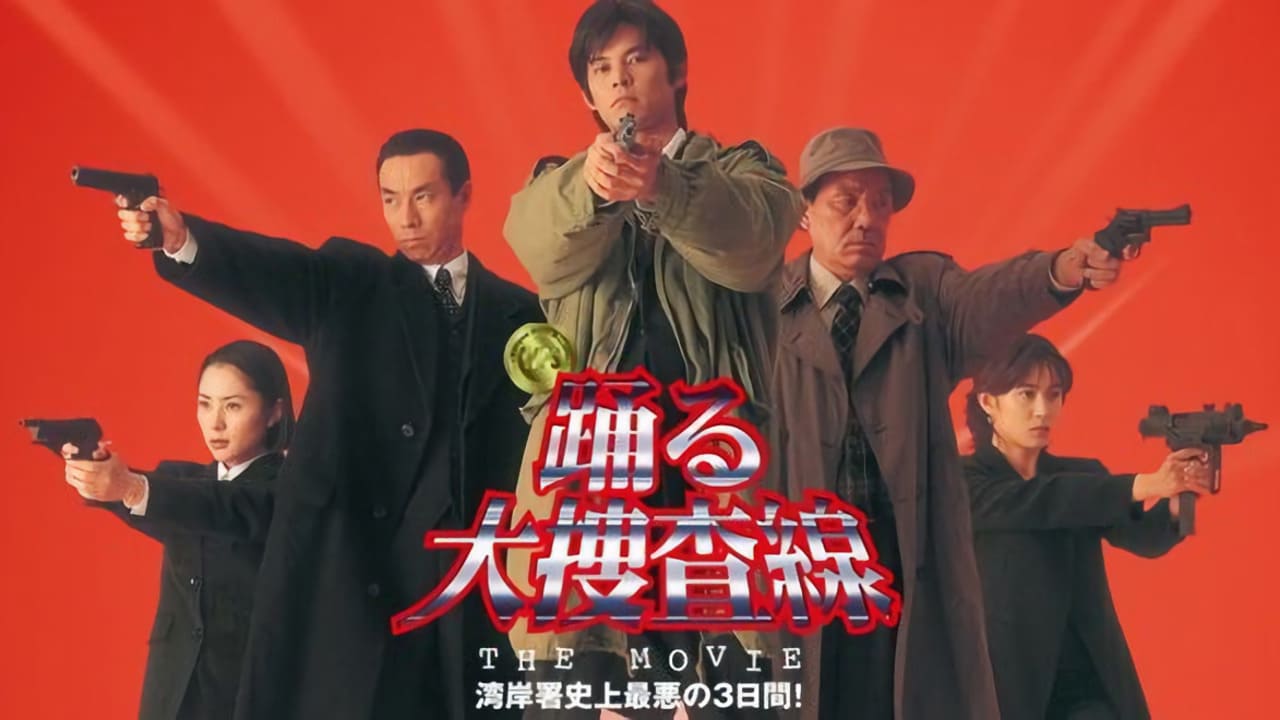
After My Neighbors the Yamadas was completed, producer Suzuki had some spare time to watch the 1998 film Bayside Shakedown (also known as Odoru daisosasen – The Movie) which was popular at the time. He was shocked at how realistically the film expressed the moods of young people and was reminded that - in his words: "this is the modern age." At the same time, he was wondering if the young protagonist Rin was a convincing image of today's youth.
Suzuki left the theater and went to Miyazaki's studio. Walking in, he found a storyboard of Rin the Chimney Painter pasted on one wall of the room. It had been about a year since he had started working on the project, so the director must've been drawing a lot of pictures. Suzuki, however, did not look at the drawings but instead started talking about Bayside Shakedown.
When he told Miyazaki how Bayside Shakedown expressed the mood of young people well and that a young filmmaker could create a film with a timeless style without being conscious of it, Miyazaki sensed it and tore down the storyboards. The producer did not speak to Miyazaki as if he was rejecting the original plan for the Rin project, but Miyazaki seemed to have read what Suzuki was thinking. And so, Miyazaki threw all the storyboards he had spent a year drawing into the trash.
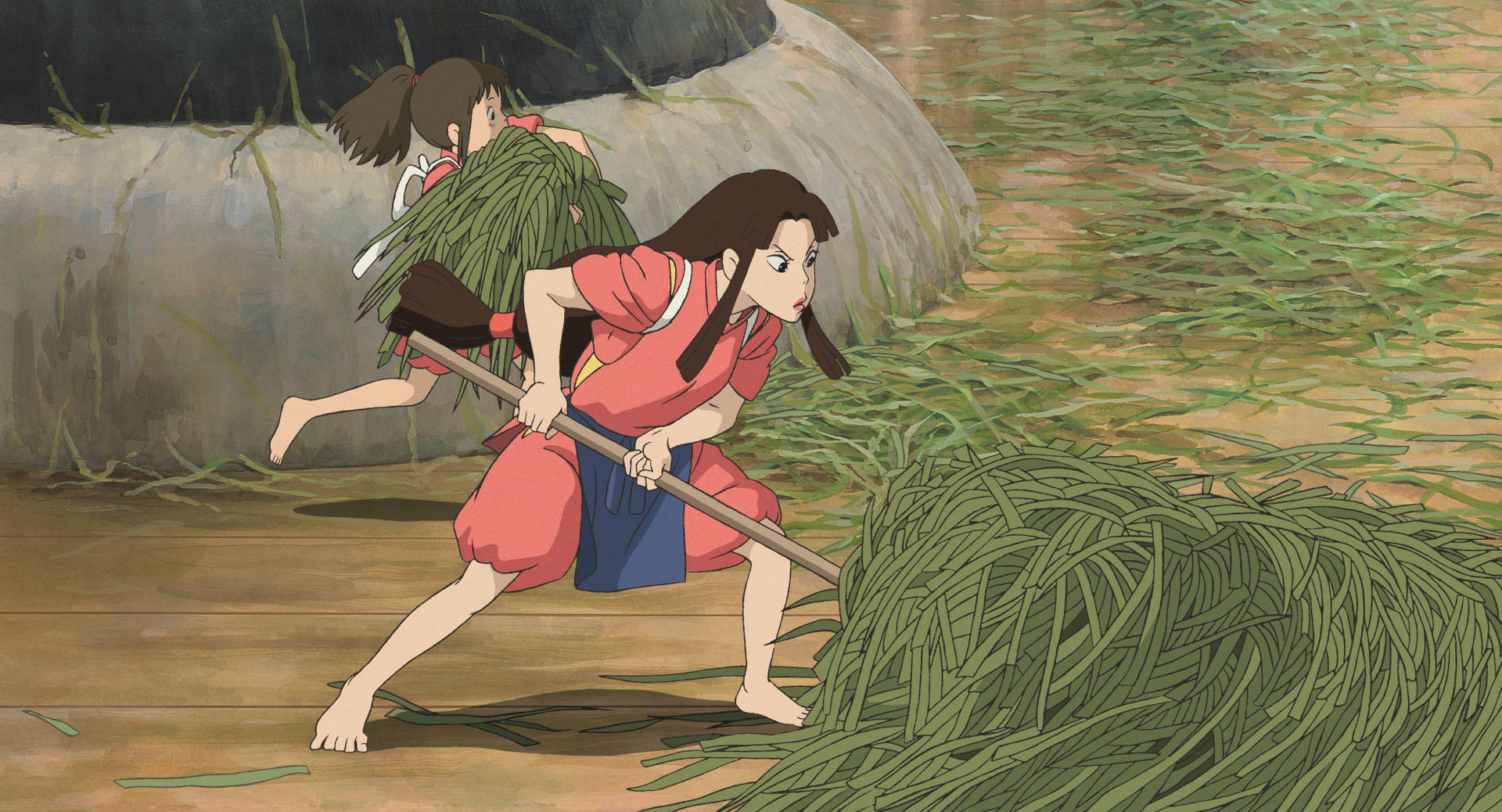
In the end, director Miyazaki discarded the Rin project that he had spent a year preparing and came up with a completely new project. And so, Spirited Away was created by mixing elements of Sachiko Kashiwaba's The Mysterious Town Beyond the Fog and Rin the Chimney Painter. The name Rin was also carried over and used for the young worker who was also Chihiro's caretaker at the bathhouse.
Sources used:
- Interview: Miyazaki on Spirited Away - translated to English by Ryoko Toyama
- Rin the Chimney Painter, a visionary work (in Japanese)
- BFI Film Classics: Spirited Away - by Andrew Osmond - see Chapter 4. The Origins of Spirited Away
Comments
Post a Comment